


Travel Weather Oman Mountains
Travel Weather Oman Mountains

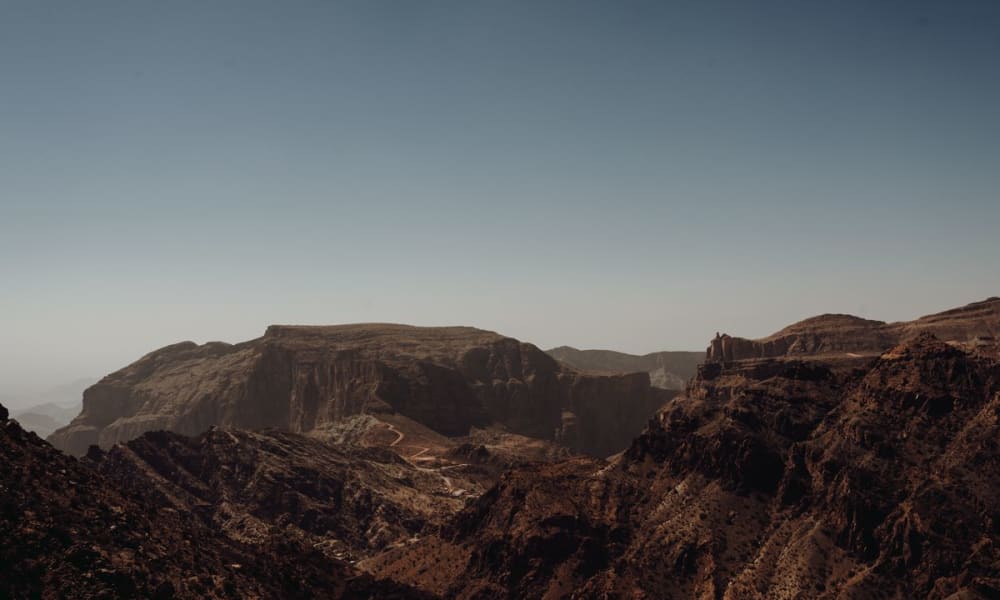
The climate in the Omani Hadjar Mountains differs significantly from the rest of the country. It is much cooler overall, which is mainly due to the high altitude of the region. On average, the tourist destinations of this mountain region are located at an altitude of almost 2,000 meters. In the peak season between October and April, it can be very cold. During the day, temperatures rarely reach more than 20°C, and at night, the thermometer sometimes shows less than 10°C. An unexpected sight for a desert region are the snow-capped peaks of Hadjar, something which is not uncommon.
Geographically, the Al Hajar Mountains form a natural barrier between the coastal and desert regions of Oman. On the coastal slopes and the central plateaus, occasional rainfalls. When touring this region, it is therefore recommended to wear warm clothing. Even in the summer months, the temperatures here barely reach more than 30° C, which is real cool compared to the rest of Oman. Wind does not play a very large role, however, this usually remains quite cool.
Discover Oman with experts who have called it their home
Your dream holiday, tailor-made by experts.
We don't just know Oman from books, we visit the country several times a year to experience the culture, landscape and people first-hand.
From your first enquiry to your return home, we are there for you personally - by phone, email or WhatsApp, whenever you need us. Our trips are as unique as you are: individually planned and provided with exclusive privileges and high-quality arrangements that will make your trip unforgettable.
Experts for your Oman trip


You might also like this

Salalah Airport
The international airport of Salalah is located behind the airport in Muscat, the second largest in the country. The airport is about 10 kilometers from the city center and lies a little north of Salalah. From here, one can choose both domestic connections to Muscat and other regions of Oman as well as European destinations. History of the airport The airport of Salalah was opened in 1977. It was the time when Sultan Qaboos had just begun to implement the first significant improvements in infrastructure development. The very first reforms and construction projects benefited from the steady f...

Women in Oman
Between Tradition and Modernity Oman – a country where fascinating traditions meet modernity, set against breathtaking landscapes and a culture of warm hospitality that continues to attract more and more solo female travelers. For women who love exploring the world independently, Oman offers something unique: safety, freedom, and the opportunity to immerse yourself in the country’s cultural traditions. Here, you can travel solo with ease, experience authentic interactions with locals, and explore vibrant women’s markets where the local life thrives....

Roads in Oman
The infrastructure in Oman is modern and has now been well developed. When the oil business was started in 1967, it was hardly present. However, a good infrastructure was necessary to bring the progress that Sultan Qaboos envisioned for Oman and which he has continuously advanced since coming to power in 1970. In this respect, most roads in the country were only built in the 1970s or later. Expansion of the road network The road network in Oman is about 60,000 kilometers long. Almost every small town in the country is now connected to the network of paved roads. In recent years, 2000 kilomet...