


Life in Oman
A Country in Transition
A Country in Transition
Oman is quickly emerging as a hidden gem for independent travelers. With its unique blend of ancient culture, breathtaking landscapes, and modern comforts, the country is drawing more visitors who crave off-the-beaten-path adventures. This rise in popularity is reflected in the latest travel trends, positioning Oman as an ideal destination for custom-tailored experiences and authentic encounters.

One of the key reasons behind Oman's growing appeal is its diverse landscapes: from the vast expanse of the Wahiba Sands desert to the serene beaches along the Indian Ocean, and from lush mountain oases to rugged mountain ranges. The picturesque wadis that cut through the country offer travelers unparalleled natural beauty and experiences. This impressive variety allows visitors to discover a range of stunning environments in a short period, fully immersing themselves in the country’s allure.
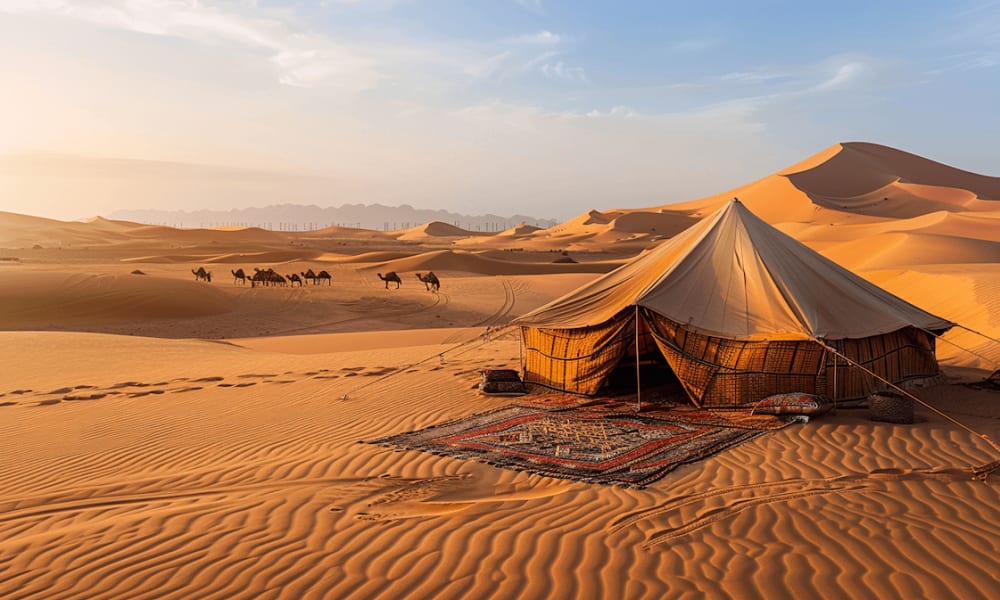
Self-drive tours are particularly popular right now, with travelers exploring Oman’s diverse regions by rental car, often a four-wheel-drive vehicle. Oman’s excellent infrastructure and high level of safety make it the perfect destination for independent journeys, blending freedom with adventure. At the same time, the range of experiences combining adventure and luxury continues to grow. Desert excursions, camel treks, and luxury glamping in the desert are just a few examples of the thrilling possibilities awaiting visitors.
Authentic experiences are also in high demand. Immersing oneself in Omani culture by visiting traditional markets, remote villages, or attending cultural festivals offers deep insights into local life. These encounters aren’t limited to specific times of the year, either; Oman’s attractions are accessible year-round. While the winter months from November to March are especially pleasant, there are also unique travel opportunities during the summer.
A Closer Look at Oman's Culture and Traditions
Oman sets itself apart from its neighbors in many ways, while preserving its rich cultural identity. In a region often known for conservative and rigid social structures, Oman stands out as a remarkably open and tolerant country. The cultural differences between Oman and its neighbors, such as the UAE, Saudi Arabia, and Yemen, are clear in everything from religion and social openness to foreign policy, economic development, and the preservation of traditions.
Traditions that Make Oman Unique
Oman’s cultural identity is deeply rooted in traditions that have seamlessly integrated with modern developments. The country’s musical heritage is strikingly diverse, featuring over 130 traditional styles that range from “sea music” to “desert music.” Unique instruments like the tambura and rababa highlight Oman’s distinctive musical traditions, which are characterized by a strong rhythm and the involvement of all generations.
Omani clothing is another expression of its rich culture. Men traditionally wear the dishdasha, a long robe typically in white, while women often don the abaya with a lihaf (headscarf). These garments vary in style and color depending on the region, reflecting local identity. The khanjar, a ceremonial dagger, is a symbol of national pride and holds deep cultural significance, with regional variations that tell different stories.
Oman’s traditional arts and crafts are also a testament to its cultural richness. From Al-Azi, a unique form of sung poetry, to handicrafts like silverwork and weaving, Oman has preserved its heritage while ensuring that future generations continue to practice these arts. Oman’s maritime tradition of shipbuilding and seafaring has fostered cultural exchanges with regions like East Africa and India, further enriching its unique cultural tapestry.
Cultural Comparisons with Neighboring Countries
Compared to its neighbors, Oman is notably more open both religiously and socially. While Saudi Arabia practices the stricter Wahhabism and the UAE and Yemen are predominantly Sunni, Oman follows the more moderate Ibadi form of Islam. This religious outlook fosters greater tolerance of different beliefs and cultural influences.
Socially, Oman is more accessible and open than Saudi Arabia or Yemen, offering greater acceptance of different lifestyles and religions. The UAE is more modern but places less emphasis on preserving traditional values as Oman does. In terms of foreign policy, Oman takes a neutral, mediating role, positioning itself as a bridge between different political and cultural worlds—unlike the more interventionist policies of Saudi Arabia and the UAE.
Economically, Oman also stands apart. While Oman and the UAE are focused on diversifying their economies and promoting tourism, Saudi Arabia remains heavily reliant on its oil resources, and Yemen’s economy is underdeveloped due to internal conflict. At the same time, Oman emphasizes the preservation of its cultural heritage, in contrast to the rapid modernization of the UAE and Saudi Arabia, where traditional culture has sometimes taken a backseat to economic progress.
Oman’s unique cultural practices and differences make it a standout in the region—a country that bridges tradition and modernity while embracing a diversity of cultures.
Oman's Political Structure and the Role of the Sultan
The Sultan is at the heart of Oman’s political and social life. As the head of state and government in an absolute monarchy, he holds executive, legislative, and judicial powers. According to the country’s constitution, known as the Basic Law, the Sultan symbolizes national unity and is the guarantor of Oman’s independence and territorial integrity. His responsibilities extend from being the prime minister, commander-in-chief of the armed forces, and head of the central bank, to serving as the minister of defense, foreign policy, and finance. This wide-ranging authority underscores the Sultan’s central role in Oman's political system.
The Sultan appoints the cabinet and special councils that assist him in shaping state policy. He also decides the composition of the Majlis al-Dawla (State Council) and selects the final members of the Majlis al-Shura (Consultative Assembly) from a proposed list. Even the judiciary is influenced by the Sultan, who appoints judges based on recommendations from the Supreme Judicial Council.
Sultan Haitham’s Reforms and Challenges
Since ascending to power in January 2020, Sultan Haitham bin Tariq has brought noticeable change to Oman’s political landscape. One of his first symbolic acts was the removal of references to his predecessor, Sultan Qaboos, from the national anthem—a gesture reflecting his intent to initiate a new chapter for Oman. In January 2021, a constitutional reform introduced the position of crown prince, reinforced the independence of the judiciary, and restructured the powers of the bicameral assembly.
Sultan Haitham is also pushing for ambitious economic reforms to reduce Oman’s dependence on oil and diversify the economy. Initiatives such as the Medium-Term Financial Plan (Tawazon Program) and the establishment of the Oman Investment Authority aim to create a more robust and diverse economic foundation that ensures the country’s long-term stability and growth.
The Sultan’s Influence on Everyday Life in Oman
The Sultan’s power shapes daily life for Omanis in many ways. The country’s centralized political structure and strict governance provide a sense of stability that many people appreciate. Trust in the Sultan and his government remains high, particularly in terms of maintaining security and promoting economic progress. However, there is a growing expectation for economic reforms, especially as the country faces high unemployment and economic uncertainties.
While the majority of the population views the political system and the Sultan’s leadership as legitimate, there are increasing calls for more political participation and transparency. Certain regions, like northern Oman and Dhofar, present specific challenges regarding loyalty to the central state. Although trust in the government remains strong, so too does the awareness of the need for change.
Oman’s Future Under Sultan Haitham’s Leadership
Sultan Haitham faces the challenge of balancing modernization with the preservation of Oman’s traditions. The people expect him to secure the continuity and stability of the country while also guiding it through necessary transformations. Amid rising expectations and economic uncertainties, the Sultan’s central role in Oman’s daily life remains unchanged—as the leader who steers the country through a period of transition and renewal.
Discover Oman with experts who have called it their home
Your dream holiday, tailor-made by experts.
We don't just know Oman from books, we visit the country several times a year to experience the culture, landscape and people first-hand.
From your first enquiry to your return home, we are there for you personally - by phone, email or WhatsApp, whenever you need us. Our trips are as unique as you are: individually planned and provided with exclusive privileges and high-quality arrangements that will make your trip unforgettable.
Experts for your Oman trip


You might also like this

Wadi Tiwi
When you explore Oman from the coastal roads you will continually encounter a typical natural attraction of the country. So-called wadis stretch along the coastal strip. Wadis are dry riverbeds that flow into the sea. These valleys are home to a unique flora and fauna and resemble dreamy oases. Wadi Tiwi is located just 3 km from the town of the same name. Wadi Tiwi is densely vegetated and its mountain formations contrast fascinatingly with the vegetation. Over a distance of about 10 kilometers, you can explore this palm-rich wadi from above and enjoy a great view of its shape. Several small ...

Sultan Qaboos Grand Mosque of Muscat
The Sultan Qaboos Grand Mosque in Muscat, the capital of Oman, stands as a remarkable symbol of the country's cultural identity and spiritual heritage. Nestled in the heart of Al-Ghubra in the Bawshar district, the mosque is a centerpiece of the vibrant Muscat Capital Area. Positioned along the main road between Muscat and Seeb, its central location makes it easily accessible to both locals and travelers from around the world....

International Connection
Oman has long become a true hotspot for tourism in the Middle East. A consistent expansion of the country's infrastructure, the introduction and development of a gentle tourism concept, and the preservation of the identity of the state and the people in Oman play an important role. It is different from countries like the United Arab Emirates, where tourists only find a colorful world of replicated superlatives, but no identity or originality. In Oman, you can get to know the culture and history of the people in the country. Overall, Islam in Oman is more cosmopolitan and progressive than in an...